

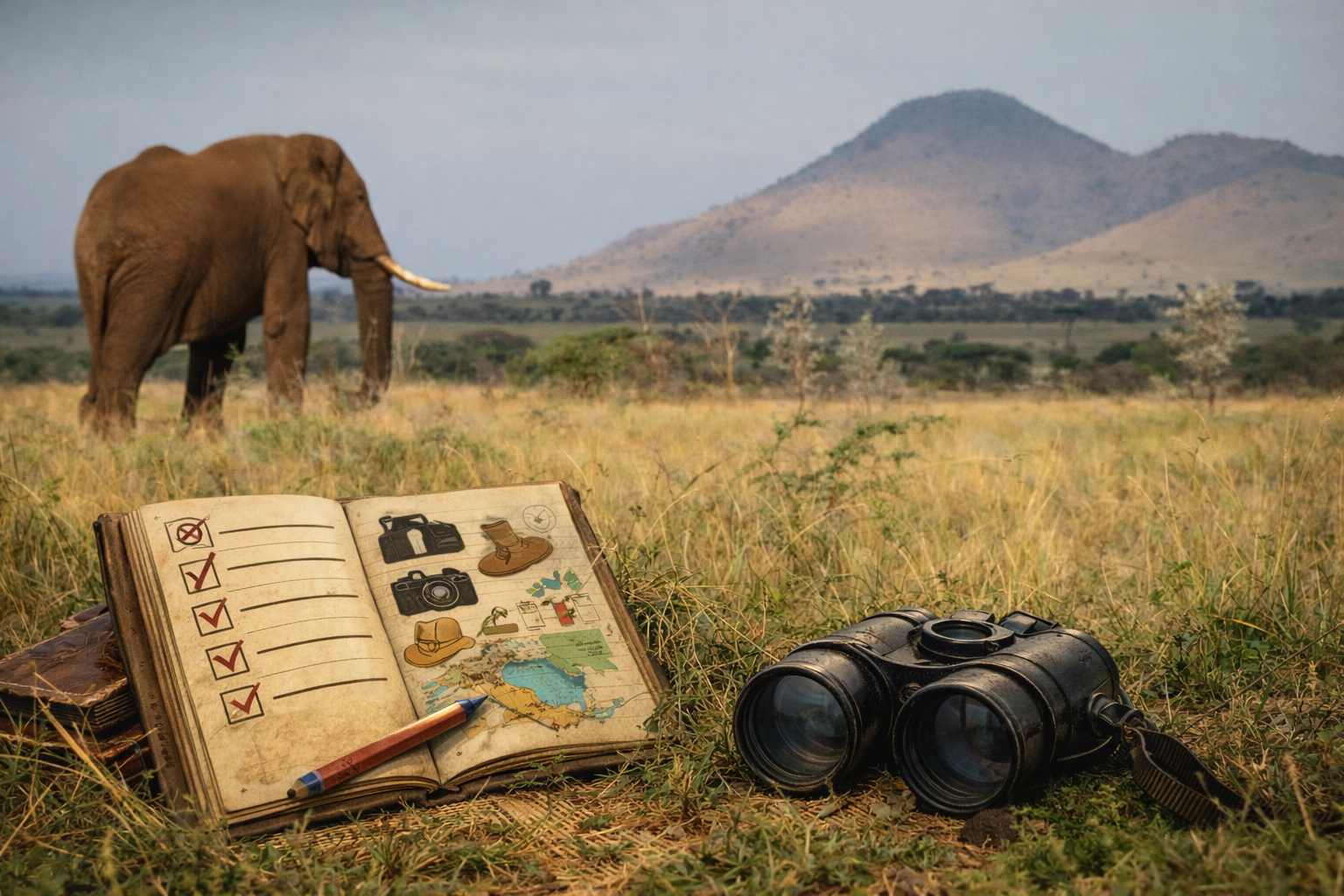
Prepare with confidence
Tanzania safari packing list
A practical travel checklist for game drives, lodge stays and bush flights — including what to pack, what to leave at home and the rules worth knowing before you arrive.
Pack lighter, travel easier
Why packing smart matters on a Tanzania safari
Safari days move between cool early mornings, warm afternoons and relaxed lodge evenings. The right clothing and a compact, soft-sided bag make vehicle transfers and bush flights easier while keeping the essentials close at hand.
This checklist is designed for private journeys through Serengeti, Ngorongoro Crater, Tarangire and Lake Manyara. For seasonal clothing decisions, also read our best time to visit Tanzania guide.
Important before you fly
Luggage advice and Tanzania travel rules
Use soft-sided luggage
Duffel bags and soft suitcases fit safari vehicles and light-aircraft luggage holds more easily. Avoid rigid, oversized cases and check the allowance for every flight in your itinerary.
Leave plastic bags at home
Plastic carrier, shopping and zip-lock bags are banned in Tanzania and may be confiscated. Use reusable fabric bags, transparent toiletry pouches or packing cubes instead.
Pack valuable items in hand luggage
Keep medication, travel documents, electronics and one change of clothes with you. Never place essential medication in checked luggage.
Your complete packing list
What to pack for a Tanzania safari
Tick off the essentials below, then adapt the quantities to your trip length, lodge facilities and season.
Clothing & footwear
- Lightweight neutral-coloured layers
- Warm fleece or jacket for early mornings
- Long sleeves and trousers
- Comfortable closed walking shoes
- Sandals or light lodge shoes
- Sun hat and sunglasses
- Swimwear and sleepwear
Luggage
- Soft-sided suitcase or duffel
- Small daypack for game drives
- Packing cubes or compression bags
- Small luggage lock
- Reusable laundry bag
Toiletries & personal care
- High-SPF sunscreen and lip balm
- Insect repellent
- Travel-size toiletries
- Toothbrush and toothpaste
- Glasses or contact-lens supplies
- Biodegradable wet wipes where needed
Hair dryers are often unsuitable for solar-powered safari camps. Check each property before packing one.
Health & first aid
- Personal medication in hand luggage
- Malaria medication if prescribed
- Pain relief and plasters
- Blister care and anti-itch cream
- Hand sanitiser
- Electrolytes or oral rehydration salts
Ask a qualified travel-health professional for advice tailored to you and your itinerary.
Electronics
- Phone and chargers
- Camera and memory cards
- Spare batteries or power bank
- Universal travel adapter
- Binoculars
- Headlamp or small torch
Documents & money
- Passport valid for at least six months
- Visa or confirmation
- Travel-insurance documents
- Vaccination documents if applicable
- Flight tickets and itinerary
- Payment card and some USD/TZS cash
- Secure copies of important documents
Useful extras
- Reusable water bottle
- Scarf or buff for dust
- Notebook or travel journal
- Compact travel games or book
- Small dry bag for electronics
Mobile internet
- Check that your phone supports e-SIM
- Install and test your e-SIM before arrival
- Save maps and key documents offline
- Keep roaming disabled if not required
Coverage varies in remote areas. Connectivity should never replace emergency planning.
Keep it simple
Do and don’t bring on safari
Do bring
- Soft-sided luggage
- Neutral, breathable layers
- Binoculars and a power bank
- Reusable water bottle
- Sun and insect protection
- Travel documents and insurance details
Leave at home
- Plastic carrier and zip-lock bags
- Oversized hard-shell suitcases
- Bright or neon safari clothing
- Unnecessary valuables
- High-power appliances unless approved
- Camouflage clothing
Emergency preparation
Medical evacuation cover for remote safari areas
Travel insurance and medical evacuation cover serve different purposes. Because many safari areas are remote, Lyoseko strongly recommends arranging suitable cover before departure.
AMREF Flying Doctors cover is not included automatically and must be purchased directly by the traveller. Read our AMREF Flying Doctors guide and confirm all medical and insurance decisions with qualified providers.
Practical questions
Tanzania safari packing FAQ
Why is soft luggage recommended on safari?
Soft bags fit more easily in safari vehicles and light-aircraft luggage compartments. They are also easier to handle at small airstrips and lodges.
Which clothes are best for a Tanzania safari?
Choose breathable layers in neutral colours, with long sleeves and trousers for sun, dust and insects. Pack a warm layer for cool mornings and higher-altitude areas.
Do I need a power adapter in Tanzania?
Tanzania commonly uses Type G sockets. Bring a quality universal adapter and confirm voltage compatibility before using appliances.
Can I wash clothes during my safari?
Many lodges offer laundry, sometimes excluding underwear for cultural reasons. Availability, turnaround time and charges vary, so check your itinerary.
Is AMREF Flying Doctors cover mandatory?
It is not generally mandatory, but medical evacuation cover is strongly recommended for remote safari travel. It does not replace comprehensive travel insurance.
Ready for Tanzania
Pack well. Then focus on the safari.
Download the printable checklist or start planning a private Tanzania safari built around your dates and travel style.