
Private Serengeti Safari
Endless plains, incredible wildlife and quiet moments that stay with you long after the dust has settled.
Guided privately by Jackson Lyoseko or one of the trusted local guides he works closely with, with time, patience and space to let the Serengeti unfold naturally.
A Serengeti Safari, the Lyoseko Way
A Serengeti National Park Safari is one of Africa’s most unforgettable wildlife experiences. Endless golden plains, incredible wildlife, the Great Migration and the chance to encounter the Big Five make Serengeti National Park one of Tanzania’s most iconic safari destinations.
Serengeti National Park is Tanzania’s oldest and most famous national park, covering nearly 15,000 square kilometres of protected wilderness.
But for us, the Serengeti is not a checklist. It is about reading the land, waiting at the right moment, following small signs and giving nature enough time to surprise you.
With Lyoseko Safaris Tanzania, your Serengeti safari is private, personal and guided with patience, local knowledge and genuine love for the wilderness. Explore our complete safari itineraries to discover how Serengeti National Park fits into your private Tanzania adventure.
Serengeti National Park at a Glance
Part of Tanzania’s famous Northern Safari Circuit.
Endless plains, woodlands, rivers and kopjes.
Tanzania’s oldest and most iconic national park.
Recognised for its exceptional wildlife and ecosystem.
Wildebeest, zebras, predators and dramatic landscapes.
Enough time to explore without rushing the experience.
It Often Begins With a Zip
A day in the Serengeti often begins with a zip.
The zip of your tent opening in the dark. The zip of a fleece jacket, because the morning air is colder than you expected. The zip of a camera bag, opened by someone who said yesterday they were “not really into photography” and is now suddenly preparing like a National Geographic finalist.
Then comes the coffee. Strong, and much more important than it would be at home.
This is how a Serengeti National Park Safari often starts. In camp, breakfast is already taken care of. Nothing too complicated, but exactly what you need before a long morning out: something warm, something filling and enough coffee.
With full bellies and sleepy smiles, you climb into the safari vehicle.
Sometimes…
The Serengeti is not about seeing more wildlife. It is about experiencing every moment a little longer.
Reading the Land
Morning is one of the best moments for wildlife viewing in Serengeti National Park. The air is still cool and animals are often active before the heat takes over.
I am not just driving around hoping for luck. I read the morning: tracks in the dust, updates on the radio, and the behaviour of zebras and wildebeest.
That is one of the lovely things about a Private Serengeti Safari. The day has space. If something happens, you can stay. If the plains are quiet, you can move. If the light is perfect and the animals are posing, nobody has to rush.
Sometimes the first big moment comes quickly. A message over the radio. Lions nearby. Suddenly everyone is very awake.
The vehicle turns, the cameras are ready, and a few minutes later you may find a pride resting in the grass. Cubs climb over each other while the adults try to sleep through the chaos. A male lion lifts his head, looks briefly at the safari vehicle, and then decides his nap is more important.
The Big Five, And Everything Else
Predator sightings are often the moments people dream about before a Serengeti Safari Tanzania, but they are never guaranteed.
Lions can sleep behind tall grass and somehow disappear completely. Cheetahs may sit on a small rise, scanning the endless plains. Leopards are even better at hiding.
Sometimes half the vehicle is staring into a tree seeing only branches, until the guide quietly points out a tail, a paw or a spotted face hidden in the shade.
And nobody understands how they missed it.
Of course, the Big Five are part of the safari dream. Many travellers ask about them long before they arrive. But a good Serengeti Wildlife Safari is not a checklist.
Some days the lions steal the show. Some days it is the elephants. Some days it is a tiny dik-dik standing in perfect morning light, or a warthog running away with its tail straight up.
Around Seronera, the Central Serengeti is full of life throughout the year. Hippos gather in pools, snorting and bubbling like they are having a spa. Baboons sit beside the track. Elephants move quietly through the grass.
The safari vehicle becomes its own little world: binoculars passed around, cameras clicking, someone whispering even though the animals are far away and absolutely not listening.
Many of our itineraries combine the Serengeti with the Ngorongoro Crater and Tarangire National Park, creating the perfect Northern Circuit safari.
Some Moments
Cannot Be Planned.
They simply happen when you have the time to wait.
When the Migration Arrives
If the timing is right, the Great Migration Serengeti can make the whole landscape feel alive. Wildebeest stretch across the plains, zebras move between them, and dust rises behind thousands of hooves.
The migration routes follow rain and fresh grass. During calving season, the southern plains and Ndutu area can be full of young animals and predator activity. Later in the year, other parts of Serengeti National Park become more important.
That is why timing and location matter so much. The migration is not a fixed event in one single place. It moves with the seasons, the rain and the grass.
From January to March, the southern Serengeti and Ndutu area are often especially rewarding because of calving season. Later in the year, the focus may shift towards Central Serengeti, Western Serengeti or Northern Serengeti, depending on where the herds are moving.
If you are planning your trip around the migration, our guide on the Best Time to Visit Tanzania explains what to expect during every season.
More Than Two Million Animals.
One Endless Journey.
Following rain, fresh grass and the rhythm of the wild.
Dust and Views
By lunchtime, breakfast feels like it happened yesterday.
A bush lunch is simple. A sandwich with dusty hands. Fresh fruit with a view over the endless plains.
Around you, birds are calling, insects are buzzing, the wind moves gently through the grass, and somewhere in the distance perhaps the low sound of wildebeest or the splash of hippos in a pool.
The Light Changes.
So Does the Safari.
As the afternoon unfolds, the Serengeti slows down.
And then, quietly, everything begins again.
Second Chances
In the afternoon, the Serengeti changes again. Lions sleep. Leopards hide deeper in the shade. Then the light softens. The grass turns gold. Shadows grow longer.
Dark clouds may gather in the distance while the plains stay bright. This is often when second chances happen.
The lions that slept all morning may finally stand and stretch. A cheetah may start to move. A leopard may shift in the tree.
Or the day may end with something small: zebras in the last light, a jackal crossing the road, or a young hyena peeking out near its den.
By the time you return to camp, the safari vehicle is usually quieter than it was in the morning. Not because the day was disappointing. The opposite.
The Wild Continues
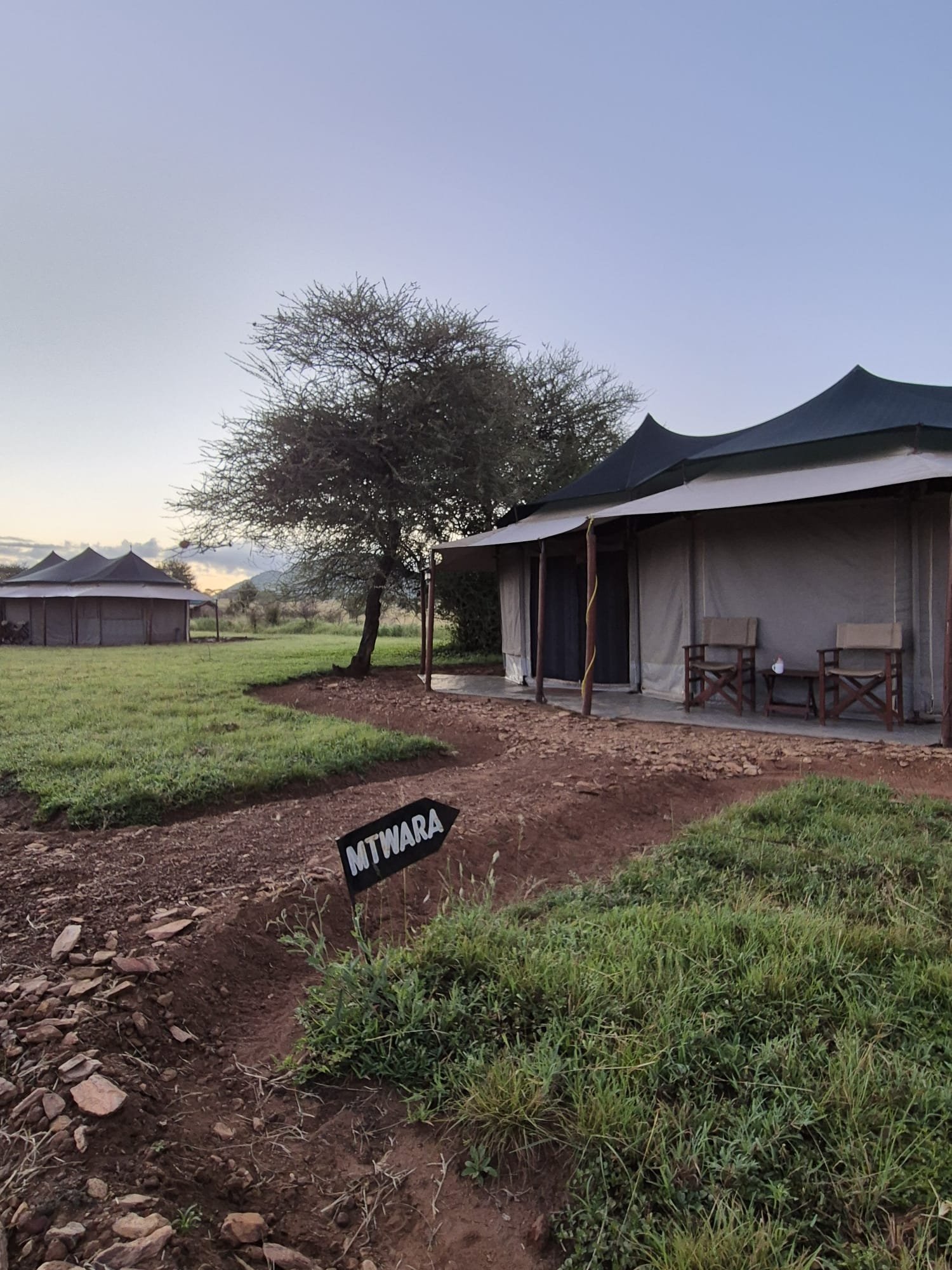
At a tented camp, the Serengeti does not stop at sunset. You may have a warm shower, a good dinner and a proper bed, but outside the canvas the wild continues.
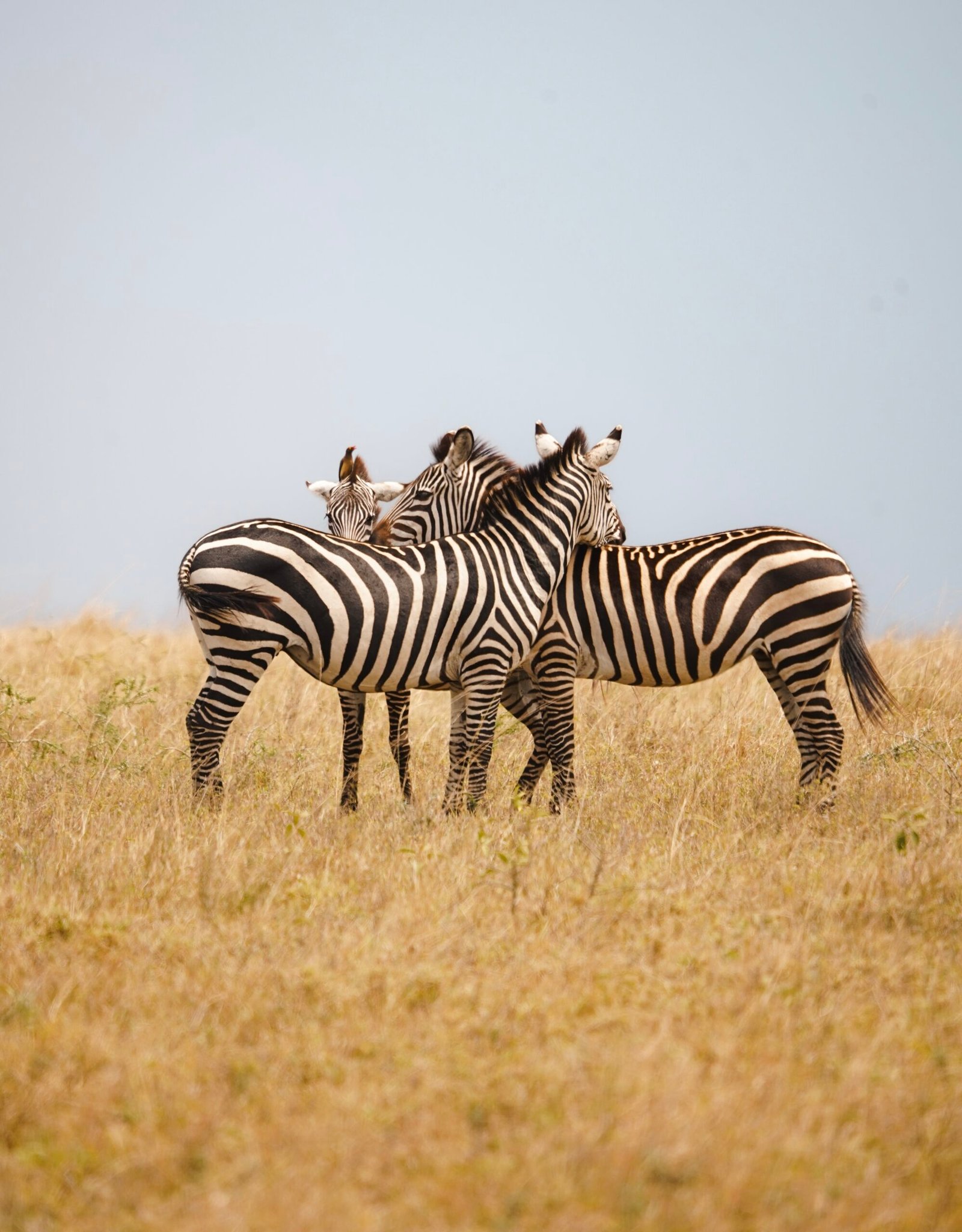
Zebras may graze near camp. Hyenas may call in the distance. Something may crack beside the tent.
That is also part of a Luxury Serengeti Safari. Not luxury in the stiff, shiny way. More the quiet kind: a comfortable bed, good food, warm water after a dusty day, and the feeling that the wild is still right there.
Wondering what influences the price of a safari? Read more about our Tanzania Safari Costs and what is included in your private journey.
Best Time to Visit Serengeti National Park
One of the questions I am asked most often is: When is the best time to visit Serengeti National Park?
The honest answer is simple. There is no single best month. Every season offers something different.
Central Serengeti, especially around Seronera, offers exceptional wildlife viewing throughout the year. If witnessing the Great Migration Serengeti is your main reason for travelling, timing becomes much more important.
January – March
Calving season in Southern Serengeti and Ndutu. Thousands of newborn wildebeest and excellent predator activity.
April – June
Green landscapes, fewer visitors and the migration gradually moving north through the Serengeti.
July – October
Northern Serengeti becomes the focus, with the famous Mara River crossings attracting visitors from around the world.
November – December
The herds slowly return south while outstanding wildlife viewing continues across the Serengeti ecosystem.
Every safari I plan is built around your travel dates, your interests and where wildlife is most likely to be. If you are comparing different routes, explore our private safari packages or request a tailor-made itinerary.
Planning Your Serengeti Safari
How many days should I spend in Serengeti National Park?
We generally recommend spending at least three nights inside Serengeti National Park. This allows enough time to explore different areas, enjoy relaxed game drives and experience the park without feeling rushed.
Can I see the Big Five in Serengeti?
Lions, elephants, buffalo and leopards are regularly seen in Serengeti National Park. Rhinos are much rarer here, which is why many of our guests combine the Serengeti with the Ngorongoro Crater for the best chance of seeing all members of the Big Five.
When is the best time to visit Serengeti?
There is no bad time to visit Serengeti National Park. Wildlife viewing is excellent throughout the year. If witnessing the Great Migration is your main goal, we will recommend the best itinerary based on your travel dates.
Is a private Serengeti safari worth it?
Absolutely. A private safari gives you complete flexibility. You decide how long to stay at a sighting, where to stop and how your day unfolds. It creates a much more personal experience than travelling in a shared safari vehicle.
Can families with children visit Serengeti National Park?
Yes. A private safari is ideal for families because the pace can easily be adapted to your children, your interests and your travel style, creating a relaxed and enjoyable safari for everyone.
Looking for more practical travel information? Visit our complete Tanzania Safari FAQ.
A Private Safari, Planned Around You
Private Safaris Only
No shared vehicles. Every safari is exclusively for you, your pace and your travel style.
Trusted Local Guidance
Your safari is guided by Jackson Lyoseko or a carefully selected local expert, with local knowledge and years of guiding experience.
Tailor-Made Itineraries
Your route is built around your dates, interests, preferred pace and the best wildlife areas for the season.
Based in Arusha
Lyoseko Safaris Tanzania is locally based in Arusha, close to Tanzania’s Northern Circuit parks.
Carefully Selected Lodges
We choose lodges and tented camps that match your comfort level, route and safari experience.
Support Before You Travel
Your safari is organised with personal guidance from Tanzania and support from our back-office.
A Serengeti Safari Is Never the Same Twice.
And that is exactly the point.
The Serengeti is not there to be controlled. It is there to be experienced. With time, patience, a comfortable safari vehicle and a guide who knows when to wait.
Every safari is personally shaped by Jackson Lyoseko and privately guided by Jackson or one of the trusted local guides he works closely with. No shared vehicles. No fixed schedules. Just your own safari, at your own pace.
Tomorrow the alarm may ring before sunrise again.
It is usually worth it.